Wednesday, May 20th 2026
Weakening of democratic institutions and pressure on the opposition
In the autumn of this year, Israel will hold parliamentary elections, and the far-right coalition of Prime Minister Benjamin Netanyahu is at a disadvantage in the polls.
Faced with falling support, the government is trying to weaken the mechanisms that guarantee the impartiality of the electoral process.
The aim is not only to influence the result, but also to create doubts about the legitimacy of the elections and make it difficult for the government to come to power. opposition.
Since returning to power in 2022, Netanyahu’s government has been accused of authoritarian tendencies.
It has attempted to pass justice reforms that, according to critics, would severely weaken the independence of the judiciary and the democratic balance in the country.
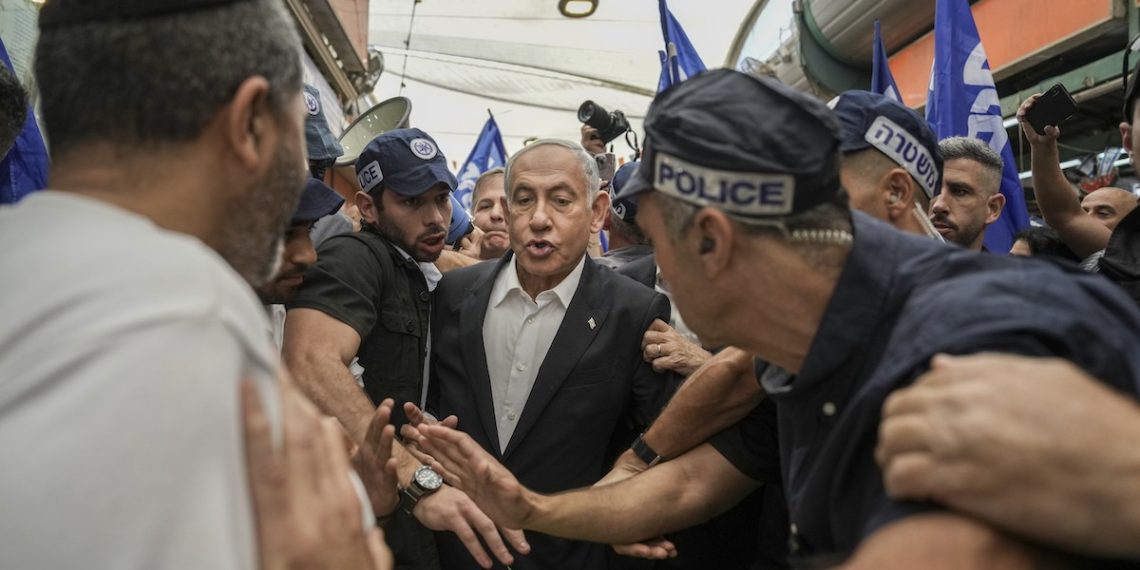
At the same time, the Minister of National Security, Itamar Ben Gvir, has been accused of using the police against dissidents, rights activists of the Palestinian people and community within Israel. The media also faces increasing pressure.
Current polls show that Netanyahu’s coalition could win about 49 seats in the Knesset, while the opposition is expected to get about 61 seats, the minimum majority to form a government.
However, the Israeli political system is very fragmented, and Netanyahu is trying to deepen this rift to make it more difficult to form an alternative government.
One of the main points of clash is the Central Electoral Commission, the institution that administers the elections. Although formally independent, its composition depends on the parliamentary balance, which gives an advantage to the parties in power.
The commission has the right to exclude parties from elections if they are considered against the basic principles of the Israeli state.
The government is applying pressure to ban the participation of Arab-Israeli parties, which represent the Palestinian citizens of Israel.
These parties are often labeled as “anti-Zionist” or “anti-Israel”. Although the Supreme Court may return them to the elections, the very process of demonization aims to damage their image in public opinion.
Arab-Israeli parties may be decisive for the formation of the next government. If the opposition does not secure an outright majority, it may be forced to rely on their votes.
Netanyahu’s strategy is to make such cooperation politically impossible, fostering polarization and distrust of these parties. Controversial bills that could affect the election process have also been introduced in parliament.
One of them, called the “Bennett law,” limits funding to politicians who create new parties, hitting Netanyahu’s main opponent, Naftali Bennett.
Another bill aims to weaken the role of the attorney general, reducing judicial control over allegations of election fraud or the disqualification of candidates.
Ben Gvir is also trying to expand the “incitement to terrorism” law, which critics say could be used against political opponents and the Arab community.
Meanwhile, he has appointed loyalists to the police and created a security structure that reports directly to his ministry.
Critics warn that these moves are gradually weakening Israel’s democratic institutions and increasing the risk of a political crisis after the elections.
Although it remains unclear how far this might go. strategy, concerns about interference in the democratic process have become stronger than ever before. square
Source: prizrenpost
Etiketa: Brief