Tuesday, August 11th 2026
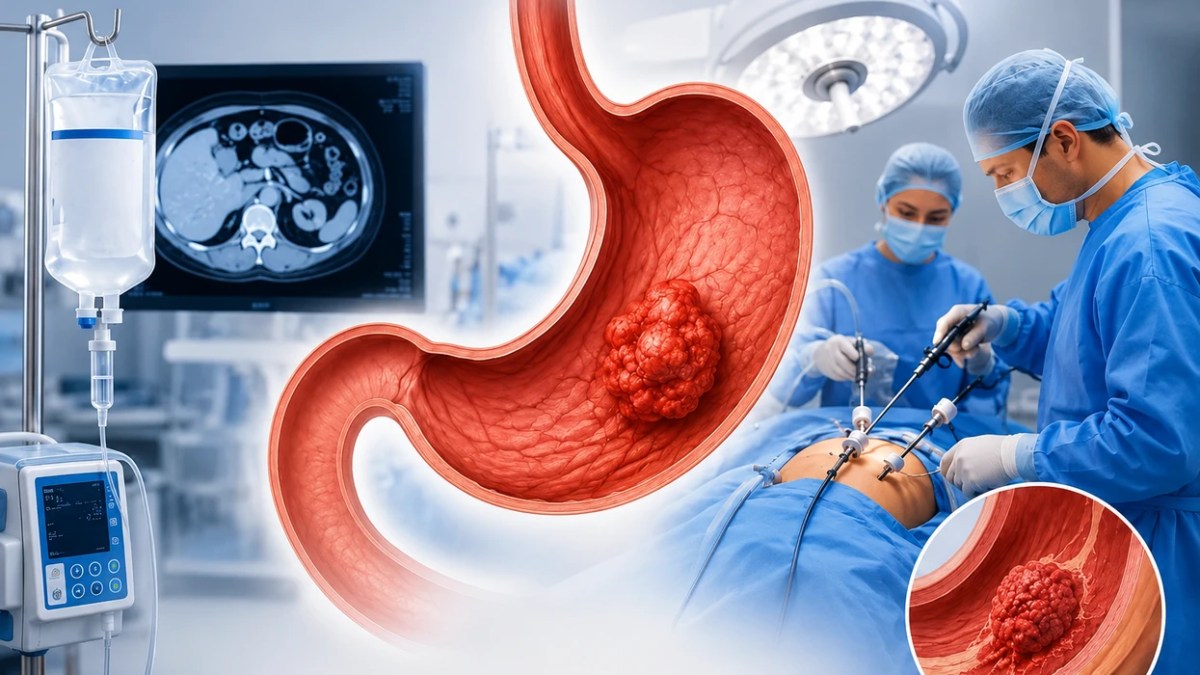
Treatment depends on the stage and location of the tumor, while in many cases surgery, chemotherapy, immunotherapy and targeted therapies are combined
Stomach cancer treatment is determined according to the stage of the disease, the size and location of the tumor, as well as the general condition of the patient. For this reason, the treatment plan is usually drawn up by a multidisciplinary team and may include several combined methods.
When surgery is possible, gastrectomy means removing part or all of the stomach. Depending on the tumor, the lymph nodes near it are also removed. According to the American Cancer Society, in the US it is recommended that at least 16 lymph nodes be removed during gastrectomy, while practices may vary according to guidelines and treatment center.
The intervention is chosen according to the stage and location of the tumor:
Endoscopic resection of the mucosa – Can be used in some patients with very early cancer and small tumors with a low risk of spreading to the lymph nodes. In this procedure, the affected tissue is removed through an endoscope, without the need for open surgery.
Partial gastrectomy – In this case, the part of the stomach where the tumor is located is removed, along with the surrounding lymph nodes. The rest of the stomach is then connected to the small intestine.
Total gastrectomy – May be necessary when the tumor affects a large part of the stomach or is in areas where complete removal is more appropriate. After the removal of the stomach, the esophagus is connected directly to the small intestine, so that food can pass into the digestive tract, Telegrafi reports.
Chemotherapy can be used before surgery, to shrink the tumor and make the intervention more feasible, or after surgery, to fight cancer cells that may have remained. In some cases, it is also used in combination with radiotherapy.
Radiotherapy is not necessary for every patient. It can be used in certain situations after surgery or to relieve symptoms in advanced disease, for example to control bleeding, pain or stomach blockage.
Targeted therapies bring new possibilities
Modern treatments can target certain characteristics of tumor cells. For example, in some patients the tumor has a high amount of the HER2 protein, so drugs that target this protein can be used. Before starting such treatment, the tumor must be tested for HER2.
There are also therapies that target other tumor factors, while the choice depends on the results of the analyzes and the molecular characteristics of the cancer.
Immunotherapy helps the immune system to recognize and fight cancer cells. It can be used in some patients with advanced cancer, often in combination with chemotherapy.
However, it is not a treatment that works the same for everyone. Patient selection may be based on certain tumor biomarkers, such as PD-L1, MSI-H, or dMMR. Some immunotherapeutic drugs are used depending on these characteristics.
Treatment is determined for each patient separately
There is no single treatment for all people with stomach cancer. The stage of the disease, the location of the tumor, the general state of health and the biological characteristics of the tumor influence the choice of therapy.
For this reason, surgery can be combined with chemotherapy, immunotherapy, targeted therapy or, in certain cases, radiotherapy. For patients with advanced disease, treatments aimed at disease control and symptom relief can also be used.
Source: prizrenpost