Wednesday, March 18th 2026
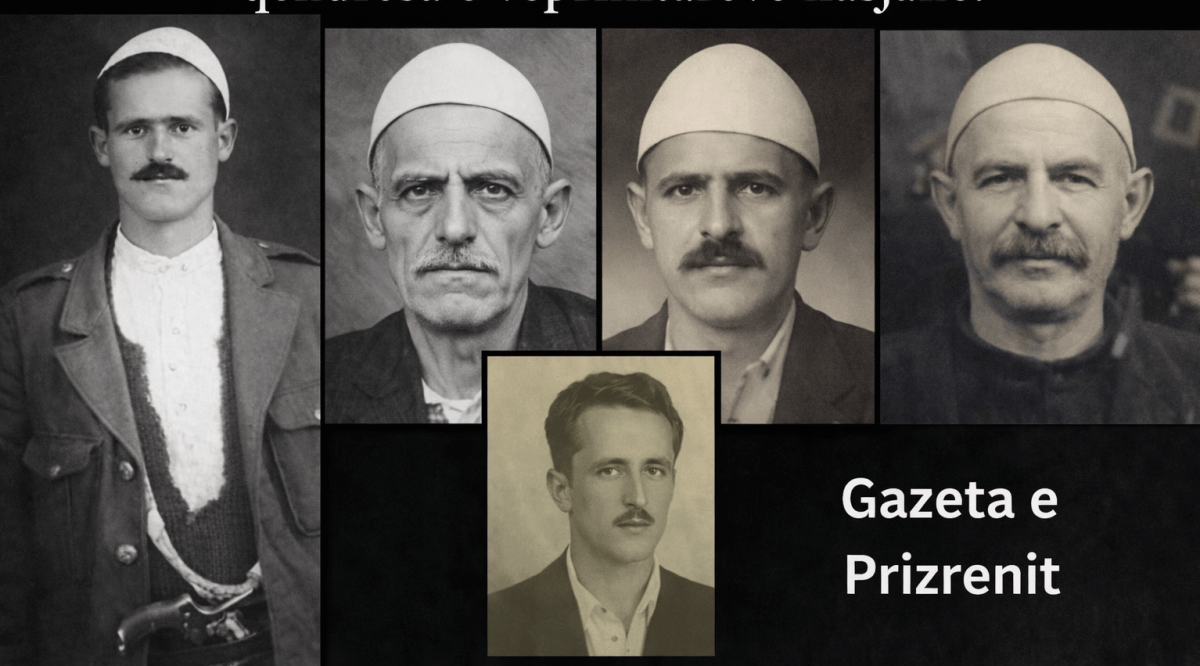
Among the convicts of the Prizren Trial of 1956 was Demush Cahani, a well-known activist from the Hasi region, namely from Rogova, who in the court’s decision was sentenced to 5 years of heavy prison and 2 years of restriction of civil rights. This sentence, given in a tense political period for Kosovo Albanians, had a meaning that went beyond the criminal punishment of an individual: it was part of a wider strategy of the government to curb any expression of national consciousness and critical thought.
The figure of Demush Cahani represented the type of intellectual and local activist who enjoyed respect and authority in his community. Such people, closely related to social life and public opinion of the time, played an important role in the formation of civic and national consciousness. Precisely for this reason, in a political system that aimed at complete control over public life and political discourse, socially influential figures were often considered suspicious and potentially dangerous to the existing order.
In this sense, the conviction of Demush Cahani should be seen as part of a wider effort by the government to neutralize individuals who enjoyed moral authority and influence in society. Through their punishment, it was intended to create a climate of fear and prevent the articulation of any opinion that could be interpreted as critical of state policies.
However, despite the punishment and suffering in Serbo-Slavic prisons, the figure of Demush Cahani remains a testimony of the moral and civic stability of a generation of Albanians who, even in difficult political circumstances, did not give up their convictions and dignity. In this sense, his story is not only a personal episode of the confrontation with repression, but also a part of the historical memory of the Albanian resistance in Kosovo during the years of Yugoslav rule. like Hasan Bajrami. He was even convicted with this name and surname. At the time of his arrest, he held the position of mayor of the Municipality of Rogova i Has, even serving his second term. However, even this official position did not save him from political repression; this fact clearly illustrates that the system did not tolerate any form that could be perceived as a deviation from the politically defined line. His status had no protective force against an unconscionable and irresistible power.
The sentence of two years’ rigorous imprisonment was not merely an administrative measure; it constituted a symbolic act of the absolute force of power and its willingness to destroy any individual, regardless of rank or reputation. Faced with this sentence, Hasan Bajrami experienced severe physical torture, from which he was left with three broken ribs – a tragic testimony of systematic violence against political prisoners and the brutality of regimes that did not accept any kind of moral resistance.
His figure represents a bitter paradox: a functionary of the highest local office, who, due to his strong convictions and personal integrity, became a victim of a harsh and cruel system. irresistible. His suffering and patience elevated the figure of Hasan Bajrami to a symbol of moral endurance and personal sacrifice, proving that neither power nor title can ever protect against political injustice and that individual dignity often stands above any official status. / Gazeta e Prizren
We use cookies to improve the experience and display ads (Google AdSense).
By clicking “Accept”, you agree to the use of cookies according to
Privacy Policy
and
Cookies Policy.
You can reject non-necessary cookies by clicking “Reject”.
Source: prizrenpost