Monday, June 22nd 2026
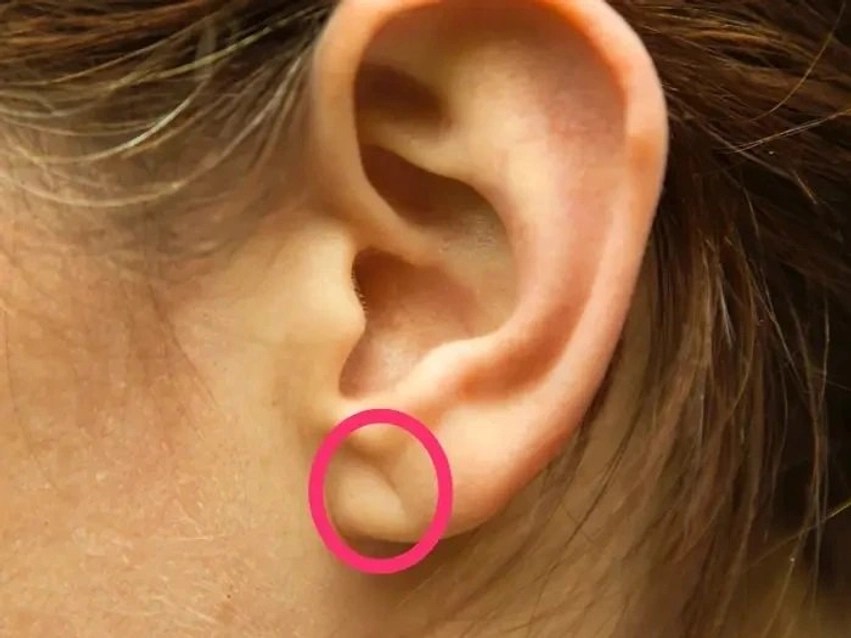
Diagonal groove in the earlobe, known as Frank’s sign, is not a diagnosis, but it can be a signal worth taking seriously, especially in people with risk factors for cardiovascular disease
Cardiovascular disease continues to be among the most serious health problems in the world. When we talk about the warning signs of heart problems, we usually think of chest pain, shortness of breath, irregular heartbeat, fatigue or swelling of the legs.
However, researchers have noticed that even a much less known, but easily visible sign can be related to the health of the heart and blood vessels. It is a diagonal furrow on the earlobe, medically known as Frank’s sign.
Frank’s sign is a diagonal furrow or crease that runs across the earlobe, usually from the area near the ear canal to the outer edge of the lobe. She got her name from dr. Sanders T. Frank, who described this sign in 1973, after noticing its presence in people with angina pectoris and coronary heart disease.
Since then, many studies have dealt with this connection. The results suggest that this sign may be more common in people with heart and blood vessel disease, especially when it is associated with other risk factors.
Some research has linked the diagonal groove in the earlobe to coronary heart disease, a condition that occurs when the arteries that supply blood to the heart become narrowed due to the buildup of fatty plaques.
A systematic review published in 2021 summarized studies that have analyzed Frank’s sign in relation to coronary disease. The authors pointed out that this sign has been associated in many studies with atherosclerotic changes, but it is not accurate enough to be used as an independent diagnostic test.
In simple words, a groove in the earlobe does not automatically indicate that a person has heart disease. But if it is present in someone who has high blood pressure, diabetes, high cholesterol, smoking, obesity, or a family history of heart disease, then it can be an additional signal to monitor cardiovascular health more carefully.
Could it be related to stroke?
In addition to the heart, Frank’s sign has also been studied in relation to the blood vessels of the brain. A study published in 2017 in The American Journal of Medicine linked the diagonal groove in the earlobe to cerebrovascular ischemic events, including transient ischemic attack, known as mini-stroke, and stroke.
241 patients hospitalized with acute ischemic stroke were included in this study. Frank’s sign was found in 190 of them, or 78.8 percent. It was more common in patients with cerebrovascular stroke than in those with transient ischemic attack.
The authors also noted that this sign was more common in patients with classic cardiovascular risk factors, such as hypertension, type 2 diabetes, older age, and a previous history of heart attack.
However, the same caution applies here: Frank’s sign does not diagnose stroke and does not reliably predict that it will occur. happen It shows only a possible connection, which should be seen together with the general state of health and other risk factors.
Scientists still do not have a final answer. One of the theories is that this furrow may be related to the loss of elastin and elastic fibers in the tissue. This is a process similar to the changes that occur in the arteries during atherosclerosis.
Another theory suggests a possible genetic connection, as Frank’s sign has been observed in different ethnic groups in different countries of the world.
Some studies have also mentioned changes in blood circulation, in small vessels and in the structure of connective tissues. These mechanisms may explain why an apparent change in the earlobe may be related to broader processes affecting blood vessels in the body.
There is no need to panic, but the sign should not be neglected
The presence of Frank’s sign does not mean that a person necessarily has heart disease or will develop it. Also, the absence of this sign does not mean that the heart is necessarily healthy.
However, if you notice a diagonal groove in the earlobe, especially if it is deep, present in both ears or accompanied by other risk factors, it is worth talking to the doctor.
Control of blood pressure, cholesterol, blood sugar, body weight and lifestyle habits remains much more important than any single sign. physical. The earlier the risk factors are discovered, the greater the opportunities for prevention and timely treatment.
Source: prizrenpost