Monday, June 22nd 2026
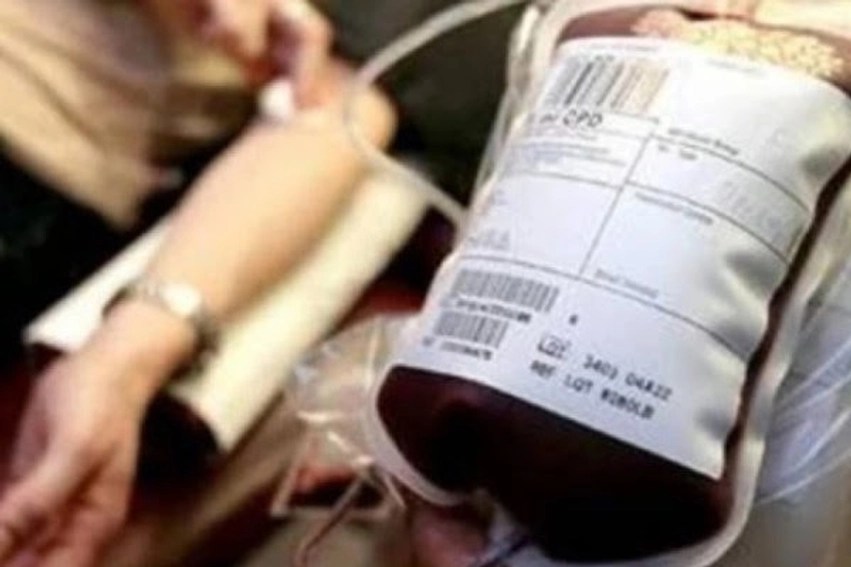
On June 15, 1667, the first transfusion of human blood was performed by Dr. Jean-Baptiste Denys.
The French doctor successfully transfused about 350 grams of blood from a sheep into a 15-year-old boy who had lost blood. The boy survived.
The French doctor Jean-Baptiste Denys was the personal physician of King Louis XIV and one of the pioneers of blood transfusion experiments. At the time, doctors still did not understand the blood group system and believed that the blood of peaceful animals such as sheep could have a sedative effect on humans, according to online records.
On June 15, 1667, Denys transfused a small amount of blood from a sheep to a 15-year-old boy who was suffering from weakness after blood loss. The boy survived and the procedure was considered a success. After that, Denys performed other animal blood transfusions on different patients.
However, not all cases ended well. One of his patients, a man named Antoine Mauroy, died after several transfusions. Denys was initially accused of murder, but the investigation showed that the patient could have been poisoned by other people. Despite this, the death caused great public debate.
As a result, blood transfusions were banned for a long period in France, Great Britain and several other European countries. For more than 150 years, this practice was almost abandoned.
An important turning point occurred in 1818, when British obstetrician James Blundell performed the first successful human-to-human transfusion, using the blood of a donor to save a patient who had lost a lot of blood after childbirth.
The real revolution came in 1901, when Karl Landsteiner discovered the ABO system of blood groups. This discovery explained why many early transfusions failed and laid the foundation for modern safe transfusions. For this work, Landsteiner won the Nobel Prize in 1930.
Today, millions of lives are saved every year thanks to blood transfusions, while Denys’ experiment in 1667 remains one of the most important and daring moments in the history of medicine.
Source: prizrenpost