Monday, June 22nd 2026
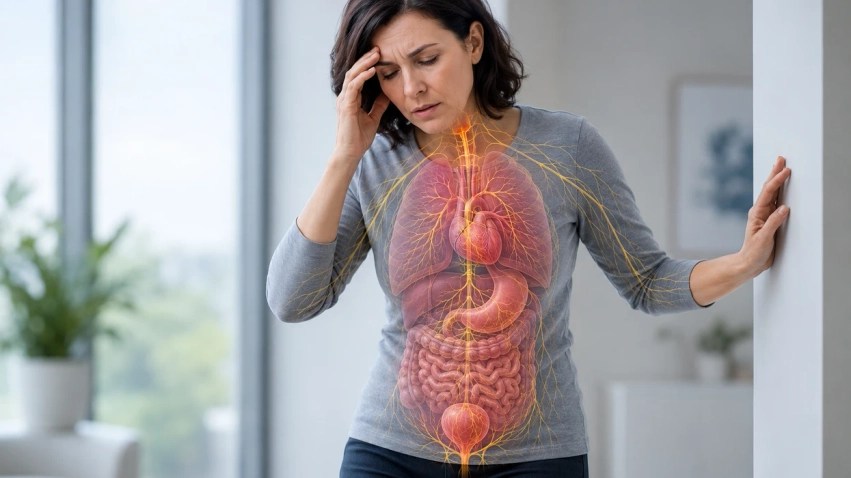
The autonomic nervous system controls vital functions we don’t usually think about, such as heart rate, blood pressure, digestion, body temperature, and bladder function
The autonomic nervous system controls functions we don’t usually think about: breathing, heart rate, blood pressure, digestion, body temperature, and bladder function. When its disorder occurs, numerous symptoms can appear that significantly affect daily life.
What is autonomic neuropathy, or dysautonomia?
This condition is known as dysautonomia or autonomic neuropathy and represents a group of disorders that appear as a result of damage to the autonomic nervous system. Disturbances can be mild and occasional, but in some patients the condition becomes chronic and seriously damages the quality of life.
Dysautonomia is a disorder of the work of the autonomic nervous system, the part of the nervous system that regulates the automatic functions of the organism. When this system doesn’t work properly, the body can lose the ability to appropriately regulate blood pressure, heart rate, digestion or body temperature.
Experts point out that dysautonomia can be primary or secondary. Primary forms most often appear as a result of neurodegenerative diseases and genetic disorders, while secondary forms are the result of other diseases or injuries.
This condition is often associated with diabetes, Parkinson’s disease, autoimmune diseases, chronic fatigue syndrome and some gastrointestinal disorders.
One of the reasons why dysautonomia is difficult to recognize is the large number of symptoms, which can affect different organs and systems.
The most common concerns Common side effects include dizziness and fainting, fast, slow, or irregular heartbeat, low blood pressure, chest pain, difficulty breathing, chronic fatigue, digestive problems, nausea and bloating, sleep disorders, migraines, weakness and decreased stamina, concentration and memory problems, and increased sensitivity to light and noise. persistent and seriously limit daily activities.
Neurocardiogenic syncope: A frequent cause of fainting
One of the most common forms of dysautonomia is neurocardiogenic syncope, also known as vasovagal syncope. It is a condition in which there is a sudden drop in blood pressure and a slowing of the heart rate, which can cause loss of consciousness.
Episodes most often occur as a result of standing for a long time, stress, dehydration, high temperatures. In these cases, the body fails to maintain a sufficient supply of blood to the brain. In some people these episodes are rare, while in others they can significantly affect the quality of life.
POTS syndrome is increasingly being diagnosed in young women
Postural orthostatic tachycardia syndrome, known as POTS, is one of the most recognized forms of secondary dysautonomia. It is characterized by a sudden acceleration of the heart rate when standing up or standing, often accompanied by dizziness, weakness, sweating and a feeling of exhaustion.
Experts emphasize that POTS often occurs in people with autoimmune diseases, while statistics show that the majority of those affected are women.
Patients also often report problems with digestion, increased sensitivity to temperature changes, fatigue during physical activity and the feeling of “fog in the head”.
Multisystemic atrophy is among the most severe forms
Multisystemic atrophy, MSA, is a rare neurodegenerative disease that leads to gradual damage to certain parts of the brain. The disease most often begins after the age of 40 and can cause serious disorders of balance, speech, movement, bladder function and blood pressure regulation.
As the disease progresses, symptoms become more pronounced and patients find it increasingly difficult to carry out daily activities.
Diabetes is one of the most common causes of autonomic neuropathy
In people with long-term diabetes, damage to the nerves that control the work of internal organs. This condition is called diabetic autonomic neuropathy.
Patients often have dizziness when standing, fast heart rate at rest, digestive problems, constipation, bladder dysfunction, and gastroparesis, a condition in which the stomach empties more slowly.
Treatment can be very difficult and is usually based on controlling the underlying disease, stabilizing blood pressure, and relieving symptoms.
Mental health often suffers due to chronic symptoms
People with dysautonomia often face anxiety, exhaustion and feelings of insecurity due to unpredictable symptoms. For this reason, psychological support, relaxation techniques, meditation and yoga can help some patients cope with the disease more easily.
Some research is also examining the relationship of vitamin D with autonomic disorders, but experts emphasize that additional studies are needed to explain this relationship more precisely.
If dizziness, fainting, sudden changes in pulse rate, chronic fatigue or problems with blood pressure regulation occur frequently. blood, it is necessary to consult a doctor.
Although the symptoms sometimes seem nonspecific, they may indicate a disorder of the autonomic nervous system, which requires detailed diagnosis and long-term follow-up.
Source: prizrenpost