Saturday, April 25th 2026
Stinging, burning, numbness or current in the legs? These simple movements and changes in routine can bring significant relief
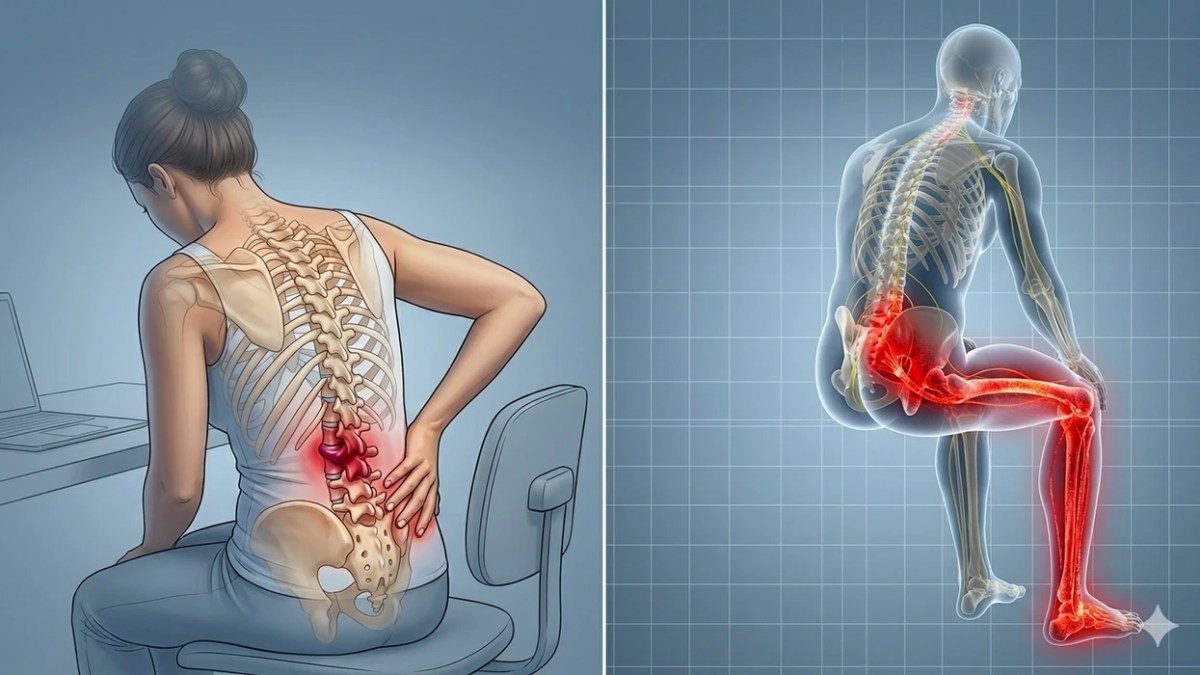
Sitting all day is a burden on the whole body, especially on the neck, back, hips and legs. This position, largely unnatural for the body, can worsen sciatica discomfort. The stabbing pain often radiates from the lower back through the groin and down the leg when sitting or driving.
Sciatica pain is the result of compression or irritation of the sciatic nerve, the largest nerve in the human body, which runs from the lower back, through the hips and buttocks, down into the leg.
How does sciatica pain occur?
The intensity of pain can vary, from mild discomfort to severe conditions that significantly affect the quality of life. People complain of:
• stabbing pain
• burning or stinging
• sensation of current running down the leg
• numbness
• needle piercing
• weakness in the legs
Usually the pain occurs on one side of the body and spreads from the lower back, through the buttocks, the back of the thigh and calf, to the foot. Certain body positions, especially prolonged sitting, irritate the nerve more. The pain can also appear during sudden lifting, bending, lifting weights or poor posture.
When the sciatic nerve is narrowed, most often due to a herniated disc, pain occurs. In people who sit for a long time, the pressure on the deep muscles of the buttocks or on the lower part of the spine increases. This constant strain can lead to flare-ups and burns.
One muscle often associated with this problem is the piriformis. It is located deep in the hip region and helps rotate the hips and stabilize the pelvis during walking. When strained or irritated, it can press on the nerve and cause sciatica-like pain.
Sitting significantly increases the pressure on the spinal discs more than standing or lying down. When we sit poorly, the pelvis tilts and the lower back rounds, which creates pressure on the nerve roots.
In addition, prolonged sitting causes tightening of the hip flexor muscles and weakening of the buttock muscles. This imbalance forces the piriformis to work harder, increasing irritation and pressure on the sciatic nerve, Telegraph reports.
5 effective exercises
Experts advise gentle stretching and range of motion exercises. If the pain increases during exercise, stop and consult a doctor.
• Sit straight with your feet on the floor.
• Place the painful leg on the other knee, in the shape of a square.
• Keep your back straight and bend slightly forward from the hips.
• Hold for 30 seconds and repeat on the other side.
• Lie on your back with your legs straight.
• Lift your right leg and grasp the knee with your hands.
• Pull gently towards the left shoulder.
• Hold for 30 seconds without pain.
3. Standing hamstring stretch
• Place your foot on a slightly elevated surface.
• Keep your leg straight, toes up.
• Bend forward slightly with your back straight.
• Hold for 20 to 30 seconds and switch legs.
• Sit on the floor with your legs straight.
• Bend the right knee and cross the sole over the left leg.
• Rest your left elbow on the outside of your right knee.
• Turn your body slightly to the right.
• Hold for 30 seconds and repeat three times.
Known in yoga, it is very effective for deep stretching of the hips.
• Start with hands and knees on the floor.
• Bring the right knee forward towards the right wrist.
• Extend the left leg back.
• Release the hip towards the floor.
• If it suits you, bend forward on the front leg.
How to control sciatica while working?
Exercise alone is sometimes not enough if daily habits are not changed.
• Adjust your posture: the lower back should be well supported. If support is lacking, use a rolled up towel.
• The 30 minute rule: get up and move every 30 minutes. Even a short walk helps.
• Position of the feet: keep the feet straight on the floor or on the support. Crossing your legs can make the condition worse.
• Hydration: adequate fluid intake helps the elasticity of the spinal discs.
Experts emphasize that continuity is the key. Five minutes of stretching every day gives better results than an hour of exercise just once a week.
If the pain does not go away, is more widespread or is accompanied by weakness in the legs, it is time to seek professional help. Early resolution of the cause can prevent more serious complications in the future.
We use cookies to improve the experience and display ads (Google AdSense).
By clicking “Accept”, you agree to the use of cookies according to
Privacy Policy
and
Cookies Policy.
You can reject non-necessary cookies by clicking “Reject”.
Source: prizrenpost