Tuesday, March 31st 2026
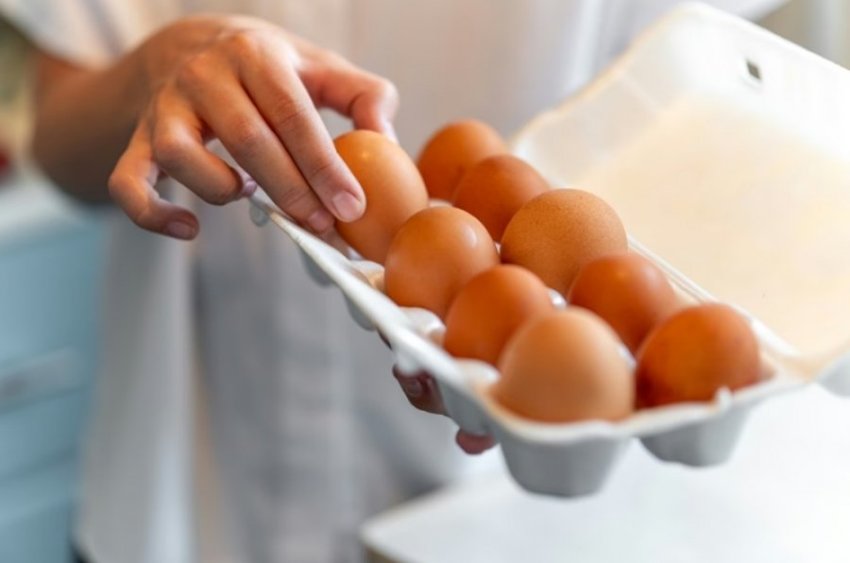
The implementation of these simple methods will ensure that the eggs you use for your favorite dishes are always fresh and safe for consumption.
At the time of holidays such as Easter, when eggs are used in large quantities for the preparation of traditional dishes, desserts, but also for coloring, the freshness of the food becomes a priority.
Using a spoiled egg can not only spoil the taste of the food, but also pose a risk health hazard due to the possibility of food poisoning.
Although the date on the package is a useful indicator, it is not always completely reliable.
Fortunately, there are three simple and effective methods at home that you can use to quickly determine whether an egg is safe to eat.
How to check if eggs are spoiled?
Before we go into the detailed explanation of the methods, it is important to understand the aging process of eggs. Eggs have a porous shell that allows air to pass through. Over time, air enters the egg, while moisture escapes, which causes changes in its interior. As the egg ages, its contents gradually dry out, which affects its quality and freshness.
This is probably the best-known method of checking egg freshness and is based on a simple scientific principle. The eggshell is porous, which allows moisture to evaporate over time while air is drawn in. The older the egg, the bigger the air pocket is formed, which reduces its density.
The procedure is simple: fill a bowl or glass with cold water and carefully insert the egg. A fresh egg will sink to the bottom and lie flat.
If it sinks but one side rises slightly, it is a few weeks old but still safe to use and should be used soon. If the egg floats to the surface, this is a clear sign that it has spoiled and should be discarded.
The other method involves a sound check. Bring the egg close to your ear and shake it gently. With a fresh egg, you should hear almost no noise because the yolk and thick white are compact.
If you hear a clear gurgle, it means the egg is older. The egg white becomes thinner and the air pocket becomes larger, so the contents move more freely. It is better not to use such an egg.
If the previous methods did not give a clear answer, the most reliable way is to break the egg in a separate container, and not directly on the plate.
In a fresh egg, the yolk is hard, rounded and swollen, and the white is dense and gathered around it. In an older egg, the yolk is flat and cracks more easily, while the white is thin and watery.
The most important indicator is the aroma. A fresh egg has a neutral smell, while a rotten one has a strong and unpleasant sulfur smell. In this case, the egg should be thrown away immediately, and dishes and hands should be washed well.
We use cookies to improve the experience and to display ads (Google AdSense).
By clicking “Accept”, you agree to the use of cookies according to
Privacy Policy
and
Cookies Policy.
You can reject non-necessary cookies by clicking “Reject”.
Source: prizrenpost