Wednesday, December 24th 2025
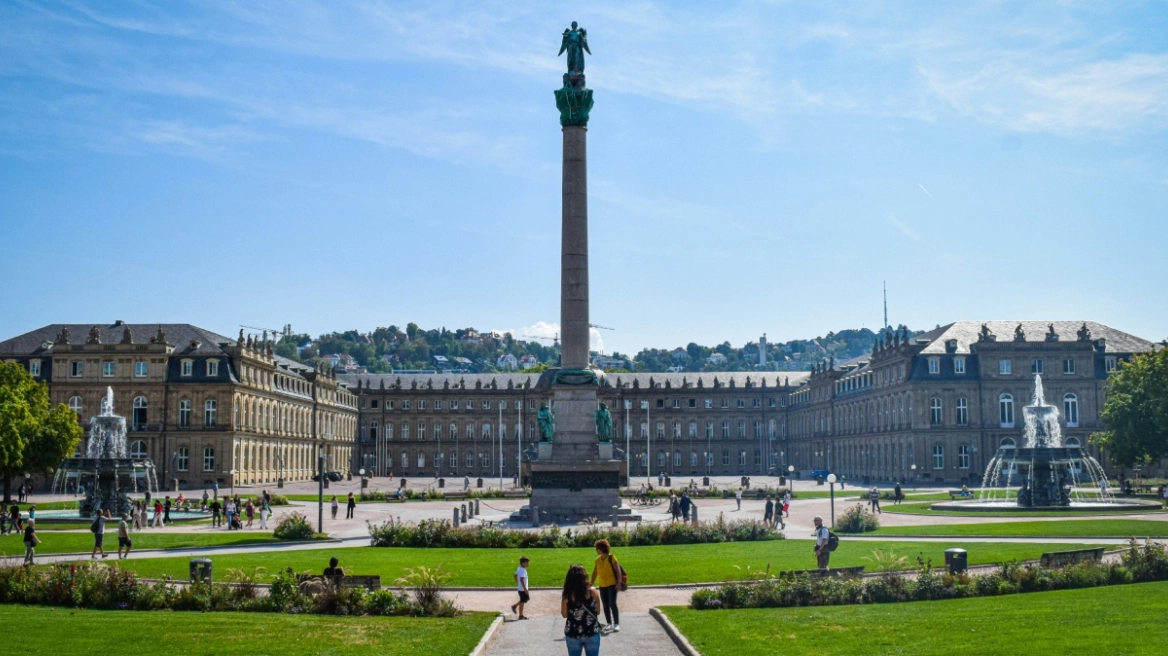
Cities that for decades were the backbone of the German car industry and were among the wealthiest regions in Europe are now facing serious fiscal difficulties. The slowdown in exports and the problems of major car manufacturers are starting to have a direct impact on the coffers of municipalities such as Wolfsburg, Ingolstadt and Stuttgart, the respective headquarters of Volkswagen, Audi and Mercedes.
According to a report from Deutsche Welle (DW), these cities are seeing significant declines in their tax revenues, mainly from corporate taxes, resulting in a particularly difficult budget period. Municipal authorities are looking for ways to cover growing deficits through new borrowing, rate hikes and spending cuts.
A typical example is Friedrichshafen, an affluent city on Lake Constance in southwestern Germany and home to ZF, one of the world’s largest suppliers of automotive components. There, the municipality plans to more than double childcare fees in the next two years, provoking strong reactions from many families.
In Ingolstadt, the cuts are already visible: public events are being cancelled, municipal staff are being cut and borrowing is increasing. Even the purchase of Christmas trees for public spaces has been cancelled. “The city is in a deep financial crisis. There is no other way to describe it,” Ingolstadt’s deputy mayor, Dorothea Denecke-Stol, told DW.
However, the pressure is not limited to car-making cities. Across Germany, municipalities are facing growing deficits after years of worsening business conditions. Increased international competition and lower demand abroad have hit exports, while higher domestic energy and labor costs have squeezed business margins.
German municipalities rely heavily on corporate taxes to fund their budgets. In the years before the pandemic, these revenues had grown steadily while exports grew strongly. But this trend has stalled. Although tax revenues rose nominally in 2023-2024, the increase was below inflation.
Researcher René Geisler, from the Technical University of Wildau, talks about “stagnation of tax revenues”, describing it as “a negative signal, since in a healthy economy tax revenues are constantly increasing”. At the same time, spending obligations remain high, due to increased immigration, an aging population and the expansion of some social benefits, as a recent report by the Bertelsmann Foundation points out.
The Association of German Cities has already warned that the total budget deficit of municipalities is expected to reach 30 billion euros in 2025, surpassing last year’s all-time record of 25 billion. euros.
In cities that depend on the automobile industry, the drop in income is even more significant. In Ingolstadt, tax revenues for 2025 are expected to be less than half of what was originally expected. In Stuttgart, the authorities expect a deficit of almost 40% compared to 2024.
According to German law, municipalities are obliged to draw up balanced budgets, which extends the planning process even into the winter months. The municipalities of Wolfsburg and Ingolstadt are still looking for solutions, while Stuttgart Mayor Thomas Fuhrmann announced in November that the city would have to completely reconsider its plans for 2026 and 2027. “The foundation we wanted to build on no longer exists,” he said in a tweet.
This picture is in sharp contrast to the years before the pandemic, when carmakers benefited from a global export boom. Ingolstadt had the second highest GDP per capita in Germany in 2023, behind only Wolfsburg, and both regions were among the five richest in Europe.
The situation at Audi and parent company Volkswagen has worsened in recent years, with particular pressure from the Chinese market. Sales in China fell by 10% year-on-year as of the first half of 2025, while parts suppliers are also facing similar problems.
“The auto industry is in a transition phase, with the transition to electrification and other changes that come with it,” said Ingolstadt’s deputy mayor, noting that the impact is also affecting suppliers in the region. However, the size of the budget deficits surprised the local authorities. While a deficit of 30 million euros was initially estimated for the next few years, the current “gap” is now estimated at 88 million euros for the period 2026-2029.
In Ingolstadt, cuts are being considered in more than 90 budgets, from waste collection and park maintenance to services for the elderly. Although canceling the purchase of the Christmas tree will save around 20,000 euros, the city has already received new loans and may raise property taxes.
In Friedrichshafen, the reduction of ZF dividends is directly affecting the social budget. The Zeppelin Foundation, a charitable foundation that owns the majority of ZF and funds social and cultural programs, has been forced to use its reserves. The new budget foresees doubling the costs of childcare for children over three and tripling those under three by 2026.
Flora Pfaff, a resident and mother of three, told DW that the increases would be a significant burden on families, noting that many had accepted the area’s high rents precisely because childcare costs were low.
Despite the difficulties, local authorities believe that cities are not on the verge of collapse. “I wouldn’t say that the city’s prosperity is threatened,” Denecke-Stol said, adding that “the cuts will be felt by residents.” /tesheshi.com/
Kaynak: prizrenpost