Monday, April 20th 2026
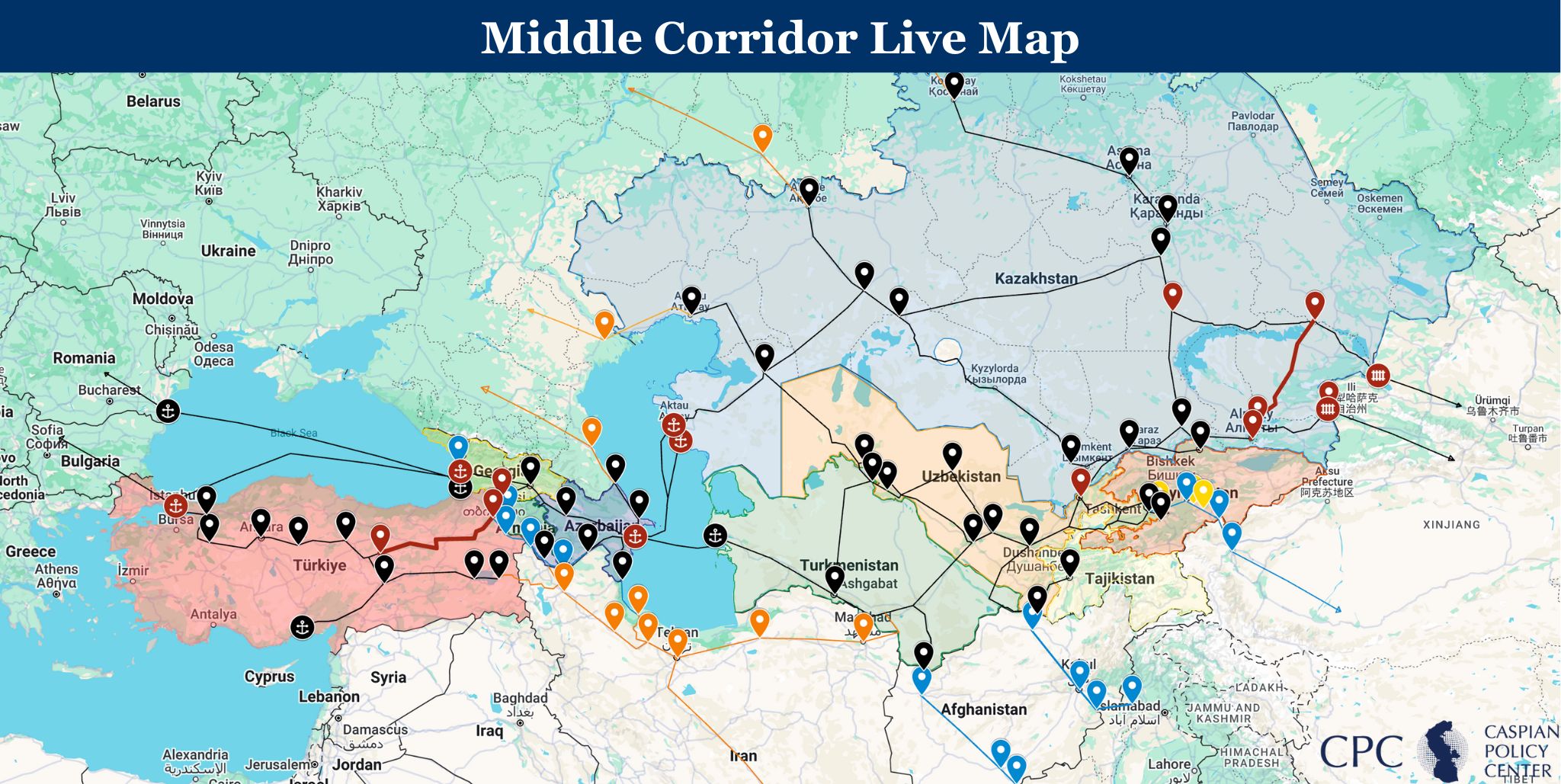
Turkey is rapidly positioning itself as a key and irreplaceable player in the new world transport map through the ambitious Middle Corridor project.
At a time when traditional sea routes are facing high uncertainties, Ankara aims to create a stable and fast connection between China and Europe.
This project is not just a commercial initiative, but an open challenge to rival projects such as IMEC (Corridor India-Middle East-Europe), which is strongly supported by Israel and the United Arab Emirates.
President Erdogan describes Turkey as an “island of stability” and a “safe haven” in a region engulfed by successive conflicts. Turkish strategy is based on the urgent need to circumvent geopolitical risks at critical points such as the Strait of Hormuz and the Red Sea, where tensions with Iran and ongoing Houthi attacks have raised insurance costs and delayed global shipments.
Using land routes and rail networks that run through Azerbaijan, the Caucasus and Central Asia, Turkey is seeking to become a major hub for the distribution of energy and goods to the European consumer.
Geography is dictating the new economy, as the Middle Corridor offers an indisputable time advantage. Chinese goods can arrive at European ports and markets in just 10 to 14 days, leaving behind sea transport that takes weeks.
The latest figures show a galloping success, with container traffic increasing by 2.5 times in one year, while volumes are expected to reach 11 million tons by 2030.
Moreover, recent diplomatic developments, such as the easing of tensions between Azerbaijan and Armenia are opening new infrastructural opportunities that were once considered impossible. The opening of border points like the one in Alican is sending a clear message of reconciliation and stability, making the region more attractive for American investments.
For its part, Washington sees this corridor as a golden opportunity to provide alternative gas routes that bypass Russia and to guarantee the supply of critical raw materials from Central Asia.
For Turkey, this project is vital especially for security and energy dominance. Through existing pipelines such as Baku-Tbilisi-Ceyhan, Turkey already serves as a main artery for millions of barrels of oil, but the ambitions do not stop there.
The reactivation of the Trans-Caspian Gas Pipeline would enable the delivery of 28 billion cubic meters of gas from Turkmenistan and Kazakhstan directly to Europe through Turkish territory. This logistical battle after Hormuz is essentially a global influence race.
Ankara is rushing to consolidate this platform before other projects take off, proving that Turkey remains the only and safest bridge connecting the competing economic systems of East and West. /tesheshi.com/
We use cookies to improve the experience and to display ads (Google AdSense).
By clicking “Accept”, you agree to the use of cookies according to
Privacy Policy
and
Cookies Policy.
You can reject non-necessary cookies by clicking “Reject”.
Source: prizrenpost