Monday, August 17th 2026
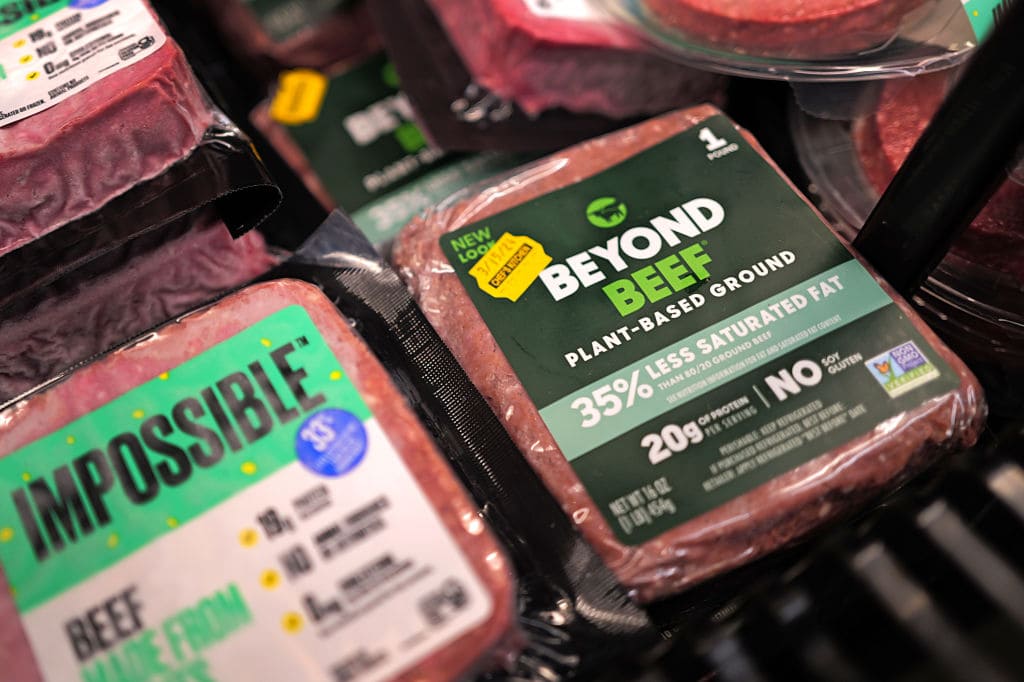
An important protein found in large quantities in meat can be produced in plants and, in the future, used to improve the taste of plant-based alternatives.
It is myoglobin, the protein that binds to oxygen and contributes to the red color of meat, as well as the characteristic umami taste.
A group of scientists has managed to produce this protein inside chloroplasts, plant cell organelles where photosynthesis takes place. For the experiment, the researchers used genetically modified tobacco and lettuce plants, causing them to produce myoglobin similar to that found in animals.
The study, published in the journal Frontiers in Plant Science, is related to an emerging field of food biotechnology known as precision fermentation.
This technology aims to produce in different organisms proteins, fats and other molecules normally found in meat, to be used more behind the improvement of plant-based products.
Until now, for the large-scale production of proteins of animal origin, scientists have mainly used yeasts or bacteria, introducing into them the genes responsible for the production of certain proteins. But in this experiment, plants were chosen.
And specifically tobacco, because it is a model organism widely studied in genetics and with a well-known genome, while lettuce was chosen because it is an edible plant.
Researchers from Imperial College London created copies of pig and cow myoglobin genes and inserted them into the chloroplasts of small tobacco and lettuce plants.
To transfer into the genes, a physical method known as the “gene gun” is used, which uses microscopic gold particles coated with the gene that is to be transferred. Some of the plants managed to successfully integrate the gene into their chloroplasts and, after growing, passed it on to their offspring.
The results showed that the chloroplasts were very efficient at producing myoglobin, even significantly more efficient than the nucleus of the plant cell, where the gene was also tested.
Production reached about 800 milligrams of myoglobin per kilogram of dry weight in tobacco and 810 milligrams per kilogram of lettuce. By comparison, real meat contains about 8.1 to 11.2 milligrams of myoglobin per gram of dry weight, so about ten times more.
At first glance, this amount may seem low. However, the researchers point out that growing plants is much more resource-efficient than raising livestock.
For this reason, myoglobin produced by plants may in the future achieve yields per hectare comparable to, or even higher than, those of livestock production, while requiring much less water and generating fewer greenhouse gas emissions.
The long-term goal is to use plants to increase protein production similar to that of meat, which can then be added to plant alternatives to give them a taste and nutritional value more similar to traditional meat.
In this way, scientists aim not only to improve the quality of these products, but also to reduce the production costs of ingredients that are more difficult to obtain today.
Lettuce may have another use in the future. Since it is a plant that is consumed directly, it could theoretically be used as a food enriched with myoglobin and heme iron, if such use were approved by food safety legislation.
“We hope that edible lettuce, modified to produce myoglobin, can one day also serve as a biofortified food with heme iron,” said Kyoko Morimoto, co-author of the study and chief scientific officer at a biotechnology company specializing in plant, which has partially funded the research.
If this technology can be developed on an industrial scale, plants could become a new source for ingredients that give meat alternatives the taste and characteristics that consumers are looking for.
At the moment, it is still a technology at the research stage, but the experiment shows a new way where agriculture and biotechnology can come together to create the foods of the future. tesheshi.com
Source: prizrenpost