Wednesday, December 31st 2025
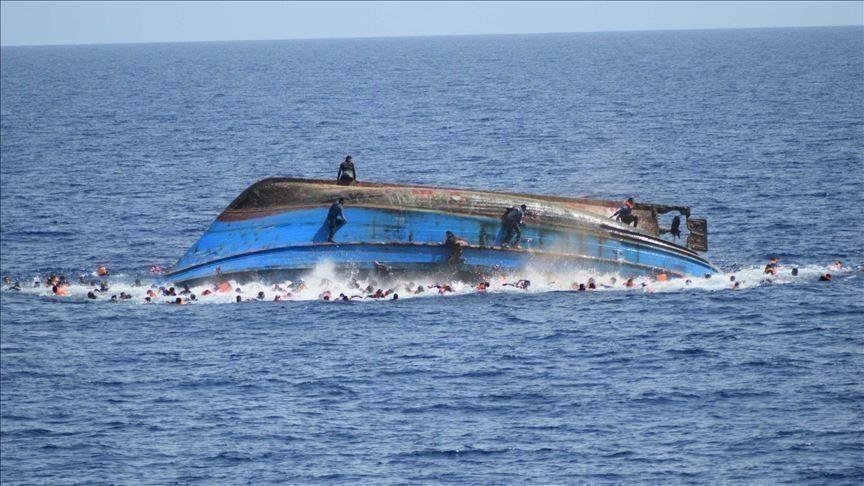
According to a recently released report, more than 3,000 people have lost their lives trying to reach Spain by sea over the past year, marking a significant decrease compared to the previous 12 months, reports Anadolu.
The non-governmental organization “Caminando Fronteras” said that 3,090 people drowned from January to December 15, 2025, including 192 women and 437 children. The victims came from 30 countries, mainly from West and North Africa, but also from Pakistan, Syria, Yemen, Sudan, Iraq and Egypt.
Activists warned that the drop in the number of victims does not mean that travel has become safer, arguing that tighter border controls are pushing migrants onto increasingly dangerous routes. The report found that crossing the Atlantic from North Africa to the Canary Islands remains the deadliest route, accounting for 1,906 deaths this year. The journey can take up to 12 days at sea.
A growing number of migrants tried to follow the route from Algeria to the Balearic Islands, where 1,037 people lost their lives. “Caminando Fronteras” highlighted the emergence of a new route from Guinea to the Canary Islands, describing it as a growing risk for people trying to reach Spain.
The report criticized what it described as a global tightening of migration policies through 2025, with a particular focus on the US. The measures promoted by the US administration “transformed the global map of mobility”, constituting “a public declaration of a contained and invisible war” against migrants.
According to the report, US-led deportation policies have helped create a pattern that shifts deportations to third countries, in some cases resulting in migrants being held in prisons, in a legal vacuum, or even on US military bases abroad. The organization said these practices mirror policies adopted elsewhere, citing the United Kingdom’s plan to deport asylum seekers to Rwanda, later halted by the British High Court, as well as Italy’s creation of detention centers in Albania. Taken together, according to the report, these measures are consolidating “a transnational system in which mobility is managed through institutional violence and the denial of basic guarantees.”
Source: prizrenpost
Etiketa: Brief