Sunday, August 9th 2026
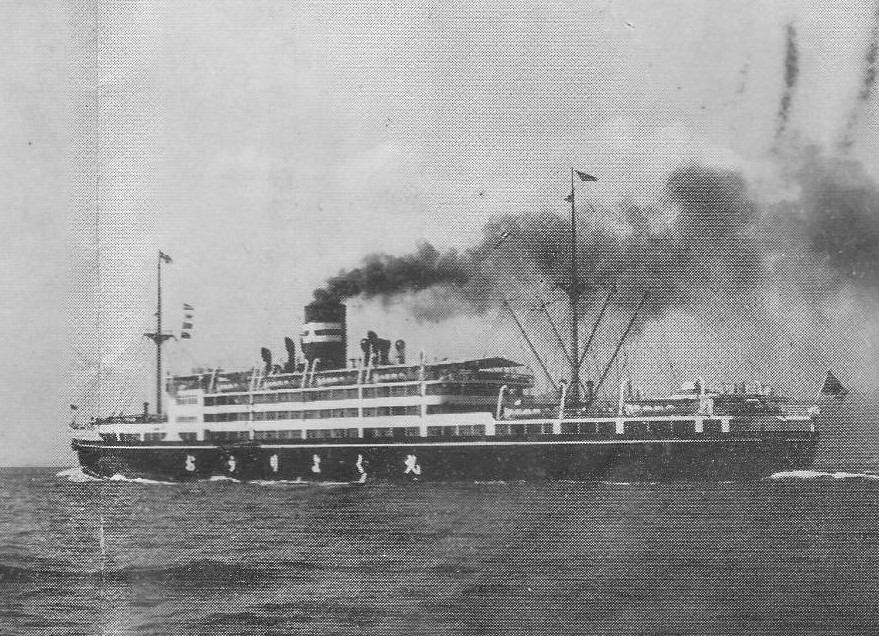
On the one hand, a tragic story of World War II and on the other, the most difficult mission ever undertaken by man at sea.
At the bottom of Subic Bay, in the Philippines, lies a sunken Japanese ship from World War II. It held no treasure, but to many its contents are extremely valuable. That is why it was decided to “recover” it, even though the conditions are extremely difficult and for decades no one decided to do this.
“Oryoku Maru”, this is the name of the ship that sank, hides one of the darkest chapters of the conflict in the Pacific. It was truly a hell ship that became the burial ground of hundreds of American prisoners of war. Their remains, which have been at the bottom for more than 80 years, are the treasure that has mobilized thousands of people to recover them and deliver them to their loved ones.
The ship left Manila on December 13, 1944, carrying about 1,600 American prisoners of war. Most of them had already survived terrible conditions and more than two years of captivity in the Philippines. These people were not dealing with a regular ship. They were crammed into barns, without air, water or enough space to sit. The hatches were closed, the temperature rose to unbearable levels and sanitary conditions collapsed within hours. Survivors later described prisoners passing out from suffocation and thirst, with many even drinking their own urine to survive. The ventilation system, which had worked when the ship was transporting horses, was now disabled.
The “Hell Ship”, of course, was given its name by the prisoners themselves. The Japanese used a total of more than 130 merchant ships to transport prisoners of war and forced labor throughout Asia. Most of them bore no markings indicating that they were transporting prisoners, making them legitimate military targets for US aircraft and submarines. Thousands of prisoners were killed not only by the inhumane living conditions, but also by the attacks of the Allies themselves, who were unaware of who was in their barns.
This is exactly what happened to the “Oryoku Maru”. Just one day after she set sail, American planes spotted the ship and attacked it, mistaking it for another Japanese carrier. Bombs and shootings caused extensive damage. Panic reigned in the barns. Those who managed to get on deck to try to save themselves were in many cases shot by the Japanese guards. The ship was abandoned as it sank in the waters of Subic Bay on December 15, 1944. More than 250 prisoners died either from bombing or trying to reach shore. The tragedy, however, did not end there. Those who survived were not released. They were recaptured by the Japanese and transferred one by one to Japan. Of the roughly 1,600 people who boarded the Oryoku Maru, only about 400 were alive when the war ended a few months later.
For decades, the wreck remained virtually untouched. Although lying at a relatively shallow depth, the ship’s hull has almost completely collapsed. Metal parts are deformed, barns are filled with mud and visibility is extremely limited. Any dive carries serious risks, as even the slightest movement can cause parts of the wreckage to collapse. This reality explains why it took more than eighty years to begin the largest recovery operation ever from this country.
The mission is being led by the Defense POW/MIA Accounting Agency (DPAA), a US Department of Defense agency responsible for locating and identifying US service members who are still missing from all wars. Preparations took nearly a decade, with historians, archaeologists, anthropologists and divers studying archives, ship plans and old evidence, before it was determined that recovery was now technically feasible.
The first major operation began in February 2026 and ended a few days ago. Specialist US Navy divers worked through the warped steel of the wreckage. They used 3D mapping technology, special metal cutting tools and mud suction systems. Each recovered object is being treated as a possible identification puzzle. A button, a boot with initials carved into it, a metal identification bracelet, or even a small human bone could be the missing piece to an eight-decade-old puzzle. The US government has not disclosed the cost of the operation, which is considered a multi-year project and is part of the DPAA’s overall budget. However, it is estimated to be one of the most complex and costly underwater recovery missions ever undertaken. It combines military technology, underwater archeology and modern forensics.
The operation is undoubtedly emotionally charged as well, fulfilling the promise that still binds the US military: No soldier should remain missing forever. For the families of those lost in the ship’s dark holds, each dive is an opportunity to close a painful cycle that began 80 years ago. /tesheshi.com/
Source: prizrenpost